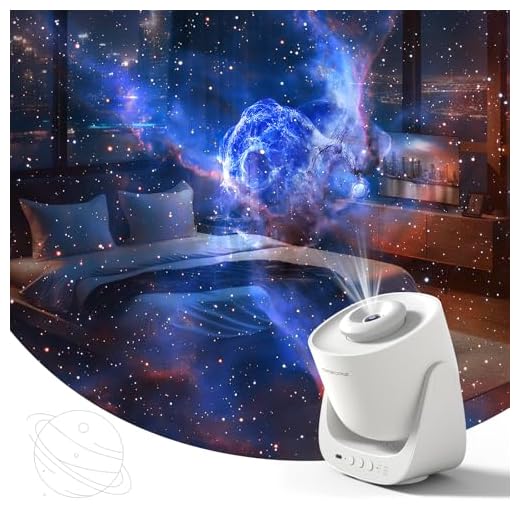
Finding the best home planetarium or star projector in 2026 can be frustrating. The market is flooded with cheap, blurry toys that look nothing like the night sky.
Whether you are a space enthusiast looking for 5K-star accuracy, a parent wanting a soothing nebula for a nursery, or a gamer looking to level up your room’s aesthetic—we’ve done the hands-on testing to find the winners.
Comparison Table with All Planetariums



In this guide, we break down:
- The Technology: The difference between ‘realistic’ planetariums and ‘aesthetic’ nebula projectors.
- What to Look For: How optics, brightness, and disc quality affect your experience.
- Our Top 5 Picks: From the high-end Sega Homestar Flux to the best-value budget models.
The Verdict: If you want the absolute most realistic experience available right now, Jump to our #1 Pick.
Use the navigation below on the right (as you start scrolling) to jump between categories as you explore.
Our 4 Pillars of Testing:
- Optical Sharpness & Resolution: We tested each unit in a standard 12×12 bedroom with 8-foot ceilings. We looked specifically for “edge-to-edge” clarity. Cheap projectors often have sharp stars in the center but blurry “streaking” at the corners; we prioritized units that maintained a crisp image across the entire projection area.
- Lumen Output (Brightness): A star projector is useless if you need a laboratory-grade “blackout” room to see it. We tested these units during various times of the day—from total darkness to dusk—to ensure the LEDs were powerful enough to produce vibrant colors and visible stars without straining your eyes.
- Motor Noise Levels: Many people use these for sleep or meditation. We measured the “whirring” sound of the rotation motors. If a motor was loud enough to be heard over soft background music, it was immediately disqualified from our top picks.
- Ease of Use & Connectivity: We evaluated how intuitive the controls are. Is the remote responsive? Does the app (for smart models like Govee) pair quickly? For manual units like the Sega Flux, we tested how easy it is to swap discs without getting fingerprints on the optics.
Transparency Note: We are independent reviewers. While we may earn a commission if you purchase through our links, our “Best Pick” selections are based solely on performance and user feedback, never by brand sponsorship.
The Best Home Planetariums of 2026: Detailed Reviews
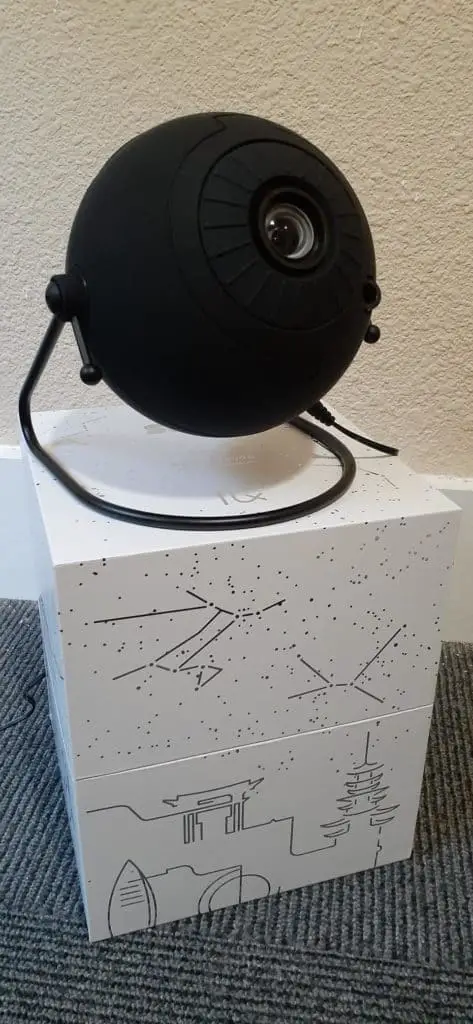
1. Sega Homestar Flux (Best Overall)
Why We Loved the Sega Homestar Flux
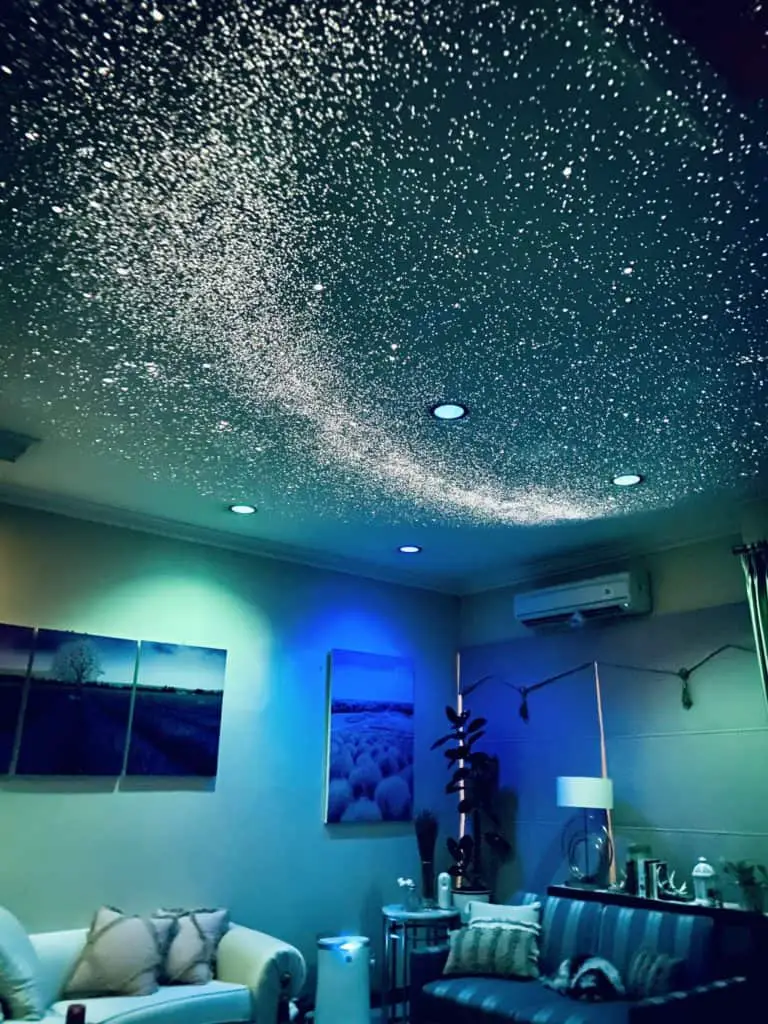
What sets it apart is the glass lens system. Unlike cheaper models that use plastic lenses (which distort the stars at the edges of the room), the Flux maintains a crisp, 5K-level resolution across your entire ceiling. We particularly love the “Shooting Star” function—it’s a subtle, timed feature that adds a layer of realism you just don’t get with the viral TikTok projectors. If your goal is true relaxation or an educational night sky for your kids, this is the gold standard.
Understanding the Sega Homestar Lineup
While the Homestar Flux is widely considered the most powerful home planetarium on the market, Sega Toys offers several variations to fit different budgets and needs. The main differences lie in the LED brightness (measured in Watts) and the specific “atmosphere” features like twinkling stars or integrated nature sounds.
All the models listed below are compatible with the same library of 30+ high-definition expansion discs, meaning you can upgrade your view of the cosmos regardless of which base unit you choose.


Expert Verdict: If you are tired of “star projectors” that look like blurry blobs of green light, this is the upgrade you’ve been waiting for. The Sega Homestar Flux isn’t a toy; it’s a high-end optical instrument.
2. POCOCO Galaxy & Star Projector
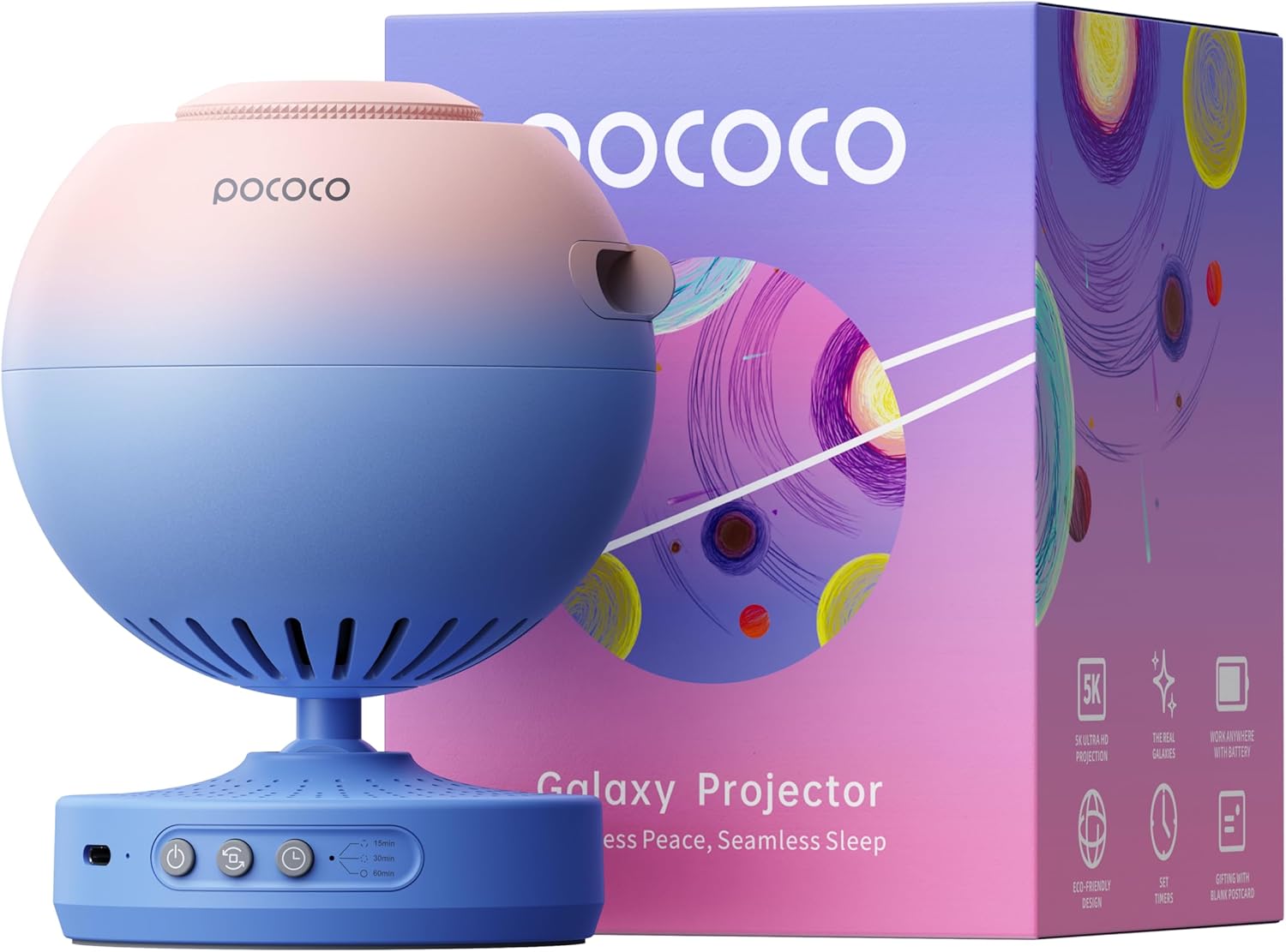
Why We Love the Pococo Galaxy Projector
Expert Verdict: If the Sega Flux is the “Professional” choice, the Pococo is the “People’s Champion.” It is rare to find a projector at this price point that uses actual optical discs rather than a cheap digital bulb.


What surprised us most during testing was the rechargeable battery. Most high-end projectors are tethered to a wall outlet, but the Pococo allows you to place it on a nightstand, a coffee table, or even take it camping without worrying about cables. The color saturation is remarkably deep—the “Western Veil Nebula” disc produces blues and pinks that actually feel immersive rather than washed out. It’s the perfect middle ground for someone who wants the high-definition “disc” experience without spending $200.
3. Dark Skys DS-FX Zoom Star Projector
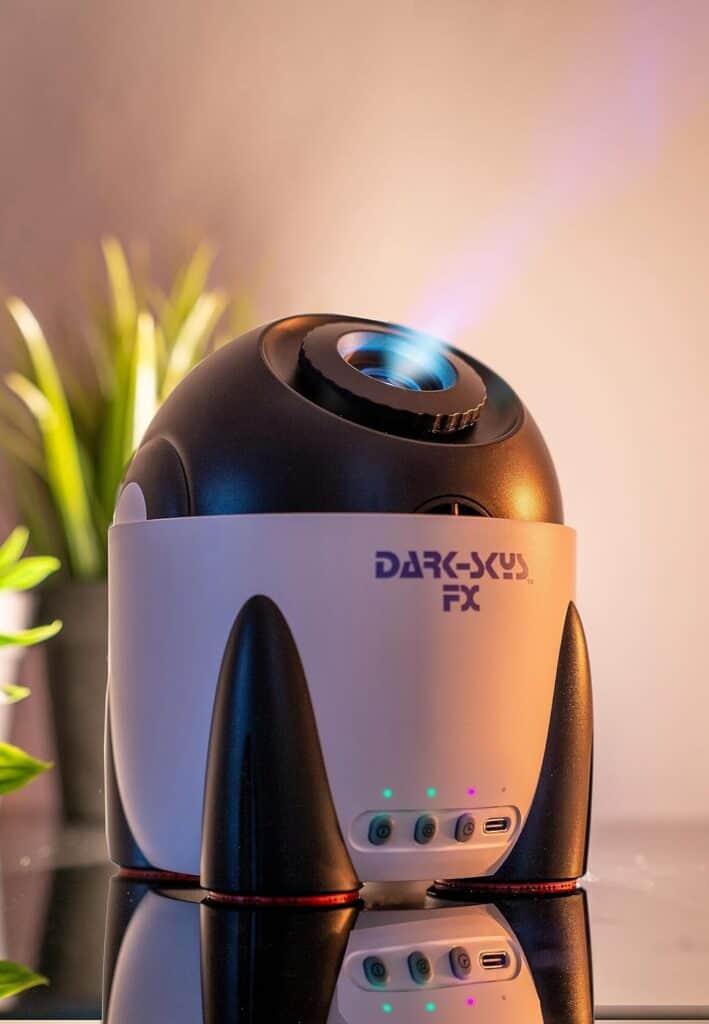
The Dark Skyes FX is a great little home planetarium that is built to last. It’s the little brother of the DS-1 model from Dark Skys that’s one of the best home planetariums on the market with over 2 million star projections, but that means it also comes with a larger price tag.
🤯 Best value! Over 3 Millions Stars!
So if you want the best of both worlds, a robust planetarium from a company that cares in delivering excellent products as well as having an affordable price tag then the DS FX is a planetarium you should consider.
Besides the great and clear projections is offer is also comes with a rechargeable battery meaning it can be charged and taken with you on trips or other places where having a power source is an issue.
4. Smithsonian Optics Room Planetarium and Dual Projector
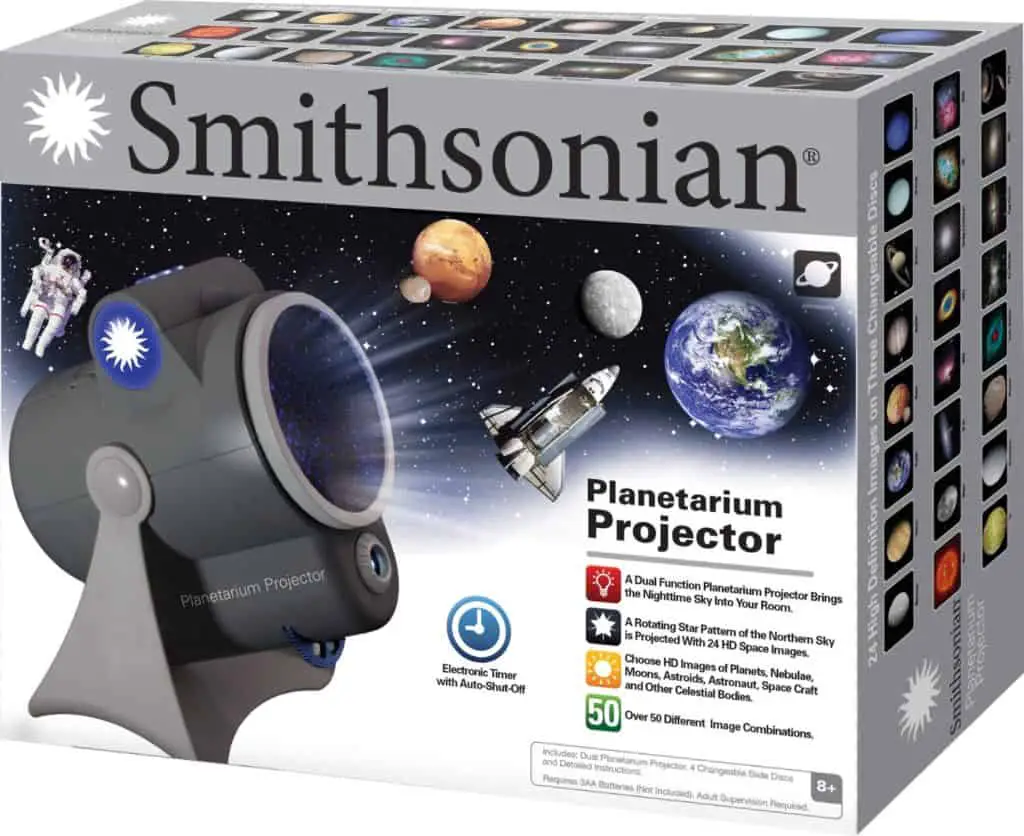
The Ultimate STEM Learning Tool for Kids Designed by the world-renowned Smithsonian Institution, this is more than just a light—it’s an educational experience. It features a dual-projector design: one side projects a rotating star map of the Northern Hemisphere, while the other projects high-definition images of planets, nebulae, and even the International Space Station.
Key Advantage: Includes 24 scientific images and educational content that turns bedtime into a science lesson.
Best For: Children (Ages 8+) and classrooms.
🔭 Great learning aid for kids!
Use this in conjunction with National Geographic Kids First Big Book of Space, by Catherine D Hughes
There’s No Place Like Space; All About Our Solar System, by Tish Rabe
5. Orzorz Galaxy & Star Projector
Why We Love the Orzorz Galaxy Projector
Expert Verdict: The Orzorz is the “hidden gem” of the optical projector world. While it looks similar to the Pococo, it feels like a much more rugged, “heavy-duty” piece of tech.
✨ Best budget friendly planetarium
What makes the Orzorz stand out in our testing is the field of view. It has a slightly wider projection angle than other budget models, meaning it can fill a larger ceiling area without needing to be placed perfectly in the center of the room. We found the manual focus to be exceptionally smooth, allowing you to dial in the stars to a pin-sharp point even on textured ceilings. If you don’t need a battery and prefer a unit that stays plugged in and feels “premium” on your desk, the Orzorz is a fantastic alternative to the higher-priced Sega.
6. Dark Skys Skyview Pocket Planetarium
Barely the size of an Echo Dot, this unique device uses a blue diode laser and precision glass optics to project over 1.2 million stars onto any surface.
Recap Top 3 Star Projectors
Best For: Serious enthusiasts and adults who want the most realistic night sky possible.
Best For: Modern bedrooms, content creators, and those who want portability without sacrificing image quality.
Best For: Travelers, campers, and “gadget” lovers.